Back

Saturday 1 Aug, 2026
Chinese Auspicious Symbols from Ancient Times to Modern Visuals in daily life
Part I
This lecture offers a comprehensive insight into the culture of auspicious symbols as one of the fundamental components of Chinese civilization, tracing its development from the earliest inscriptions to contemporary everyday usage. Participants will gain an understanding of how abstract ideas of happiness, joy, and prosperity in China are transformed into concrete visual, linguistic, and artistic forms.
During the lecture, the following aspects of Chinese civilization will be addressed:
▫️ the historical development of the concept of auspiciousness, from oracle bone inscriptions to the Ming and Qing dynasties;
▫️ auspicious motifs in applied arts (paper cuttings, porcelain, embroidery, lacquerware);
▫️ Chinese writing as a cultural bearer of meaning, with an analysis of the evolution and symbolism of selected characters with auspicious meanings;
▫️ the role of language, homophony, wordplay, and metaphor in the formation of auspicious motifs;
▫️ the presence of motifs of good fortune in idioms and their significance in language and modes of thinking;
▫️ the social function of auspicious imagery and its presence in contemporary design (e.g. logos) and everyday life of modern China.
Part II
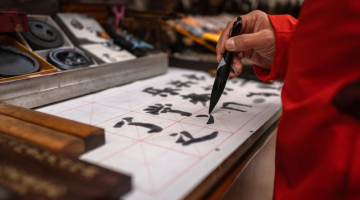
Practical exercise/workshop – Writing selected simple Chinese characters or their components, using examples of characters with auspicious meanings, on calligraphy paper. The exercise will provide insight into the basics of the Chinese writing system, including character structure, types of characters, component parts, and stroke order, with respect for the square form.
Lecturer: Jelena Stjepcevic, PhD
Academic profile: https://independent.academia.edu/JelenaStjepcevic
This lecture offers a comprehensive insight into the culture of auspicious symbols as one of the fundamental components of Chinese civilization, tracing its development from the earliest inscriptions to contemporary everyday usage. Participants will gain an understanding of how abstract ideas of happiness, joy, and prosperity in China are transformed into concrete visual, linguistic, and artistic forms.
During the lecture, the following aspects of Chinese civilization will be addressed:
▫️ the historical development of the concept of auspiciousness, from oracle bone inscriptions to the Ming and Qing dynasties;
▫️ auspicious motifs in applied arts (paper cuttings, porcelain, embroidery, lacquerware);
▫️ Chinese writing as a cultural bearer of meaning, with an analysis of the evolution and symbolism of selected characters with auspicious meanings;
▫️ the role of language, homophony, wordplay, and metaphor in the formation of auspicious motifs;
▫️ the presence of motifs of good fortune in idioms and their significance in language and modes of thinking;
▫️ the social function of auspicious imagery and its presence in contemporary design (e.g. logos) and everyday life of modern China.
Part II
Practical exercise/workshop – Writing selected simple Chinese characters or their components, using examples of characters with auspicious meanings, on calligraphy paper. The exercise will provide insight into the basics of the Chinese writing system, including character structure, types of characters, component parts, and stroke order, with respect for the square form.
Lecturer: Jelena Stjepcevic, PhD
Academic profile: https://independent.academia.edu/JelenaStjepcevic